Ads 468x60px

Showing posts with label Audra. Show all posts

Monday, August 20, 2012

Dear Diary: Orders just gone round that there are to be no lights after dark...


August 11, 1806

Being anxious to overtake Captain Clark, who from the appearance of his camps could be at no great distance before me, we set out early and proceeded with all possible expedition . . . My wounds (accidental gunshot from the day before) felt very stiff and sore this morning but gave me no considerable pain. There was much less inflammation than I had reason to apprehend there would be. I had, last evening, applied a poultice of Peruvian barks. At 1p.m. I overtook Captain Clark and party and had the pleasure of finding them all well. As writing in my present situation is extremely painful to me, I shall desist until I recover, and leave my friend Captain Clark the continuation of our journal.

~Captain Meriwether Lewis, from The Journals of Lewis and Clark

Tuesday, August 7, 2012

Dear Diary: Life of a wife and mother sometimes very wearing...


August, 1850

I get very little time to write or think; for my working days have begun, and when school is over Anna wants me; so I have no quiet. I think a little solitude every day is good for me. In the quiet I see my faults, and try to mend them; but, deary me, I don't get on at all.

~Louisa May Alcott, Louisa May Alcott: her life, letters, and journals, edited by Ednah D. Cheney

Thursday, July 26, 2012

Dear Diary: I can shed tears as I please—no one's looking...


July 10, 1919

In Venice, when we were on the way to stay with my mother-in-law, we bought some pipes. I said to her on arrival: 'Madame--' (she calls me Liane and I call her Madame, because I can hardly in decency say 'mother' to a woman scarcely ten years older than I am) -- 'Madame, I must confess to a vice: I smoke a pipe.' I wanted to test her a little. She looked at me with raised eyebrows and pursed lips, then said: 'So much the better. I much prefer the smell of a pipe to that of cigarettes.' The pipe stayed in my suitcase.

~Liane de Pougy, My Blue Notebooks: The Intimate Journal of Paris's Most Beautiful and Notorious Courtesan

Wednesday, May 23, 2012

Dear Diary: Yesterday I went to the Titanic enquiry...


May 16, 1772

Last Wednesday Bet Smith was set upon the gallows. She behav'd with great impudence. Thursday I danc'd a minuet & country dances at school, after which I drank tea with aunt Storer. Today I am somewhat out of sorts, a little sick at my stomach.

~ Anna Green Winslow, age 10, from The Diary of Anna Green Winslow, a Boston Girl

Tuesday, May 15, 2012

Books Within Books: When A Man Marries

We love when our favorite novel characters love to read as much as we do! In Mary Roberts Rinehart’s novel, When A Man Marries, Kit McNair and her society friends are an educated lot, and the story features a few literary references that would have resonated with the early 20th century reader, but might be a little mystifying to today’s reader. Here, a few of those references from Rinehart's delightful romantic comedy are explained! The first comes when Kit meets the handsome Tom Harbison, who has a sense that they've met before:

"I beg your pardon," he said, and let my hand drop. "Just for a second I had an idea that we had met somewhere, a long time ago. I suppose--no, it couldn't have happened, or I should remember." He was smiling, half at himself.

"No," I smiled back at him. "It didn't happen, I'm afraid--unless we dreamed it."

"We?"

"I felt that way, too, for a moment."

"The Brushwood Boy!" he said with conviction. "Perhaps we will find a common dream life, where we knew each other. You remember the Brushwood boy loved the girl for years before they really met."

But this was a little too rapid, even for me. "Nothing so sentimental, I'm afraid," I retorted. "I have had exactly the same sensation sometimes when I have sneezed."

Friday, May 11, 2012

Dear Diary: A French sailor kissed Mummy and changed hats with her...


May 1, 1872
Wrote another sketch for the Independent: "A French Wedding," and the events of my travels paid my winter's expenses. All is fish that comes to the literary net. Goethe puts his joys and sorrows into poems; I turn my adventures into bread and butter.

~ Louisa May Alcott, from Louisa May Alcott: her life, letters, and journals, edited by Ednah Cheney

Monday, May 7, 2012

Extra! Extra! Red Sox Win, Oreo Invented, Tragedy on the Sea and at the South Pole

In The Prince and Betty, there’s plenty of headline making news--long-lost royal heir, newspaper exposés of slums, gangsters--but 1912 was filled with explosive headlines to rival Betty’s. Some highlights...


January: Robert Falcon Scott, British explorer, reaches the South Pole--second. Five weeks earlier, Norwegian Roald Amundsen and his expedition made the historic expedition. News of this victory, however, wouldn’t come until March, when Amundsen reached Tasmania and telegraphed his announcement.


February: A blizzard that began in the Midwest reaches New York City on the 22nd with typhoon-force gales. Just after midnight, meteorological devices record a 110 mile-per-hour gust of wind, and for most of the day, the city is buffeted with 70 mile-per-hour winds. People are ‘hurled’ to the street, and trees, airplanes, and tugboats are ripped into the air. While New York City’s skyscrapers survived relatively unscathed, the electric billboards and signs that decorated Times Square were torn down and smashed. On the 23rd when the storm subsided, the streets were covered with glass, metal, and other debris.

Sunday, April 29, 2012

Dear Diary: I vow I will not move one step, unless carried away...


April 15, 1820

On the 15th fell the first shower of rain we had seen for six months, and on the 17th the thermometer rose to 77° in the shade. The whole face of the country was deluged by the melted snow. All the nameless heaps of dirt, accumulated in the winter, now floated over the very thresholds, and the long-imprisoned scents dilated into vapours so penetrating, that no retreat was any security from them. The flood descended into the cellar below our house, and destroyed a quantity of powder and tea; a loss irreparable in our situation. The noise made by the frogs which this inundation produced, is almost incredible. There is strong reason to believe that they outlive the severity of winter. They have often been found frozen and revived by warmth, nor is it possible that the multitude which incessantly filled our ears with its discordant notes could have been matured in two or three days.

~Captain John Franklin, from Narrative of a Journey to the Shores of the Polar Sea, Volume One

Friday, April 20, 2012

Vintage Happy Hour with Audra: Cin Cin Campari!


In 1860 in a small town near Milan, the liquor known as Campari was created. Originally called Bitter all'Uso d'Holanda, it is an infusion of aromatic herbs and other plants (such as ginseng) as well as fruit (like oranges and rhubarb). Made up of anywhere from twenty to sixty ingredients, it is a closely guarded secret. A "bitter" liquor, it’s considered medicinal in quality and was originally taken undiluted before lunch to aid in digestion.

The first Campari cocktail came about during the belle époque of the 1890s. Called the Milano-Torino after the source of its two main ingredients, Campari and vermouth (along with a shot of club soda), the drink was renamed the Americano after its popularity with Americans (and perhaps a marketing ploy to cause more Americans to order it). In 1960, Ian Fleming featured the Americano in his James Bond novel Casino Royale, the first alcoholic drink Bond orders, and in From a View to Kill Bond even clarifies he prefers drinking it over his usual choices when at an outside cafe.

Monday, April 16, 2012

Brawlers, Bashers & Battlegrounds: Early 20th Century Gangsters

While many associate New York City gangs with either Martin Scorsese’s 2002 film The Gangs of New York or the high-profile celebrity criminals of the Prohibition, during the late 1800s and early 1900s, Manhattan’s Lower East Side was thick with gangsters, as evidenced in Legacy Romance's newest release, The Prince and Betty by P.G. Wodehouse. The battleground was the immigrant slums, but those fighting for control weren’t outsiders, but rather immigrants themselves (or children of immigrants). Mobsters from these communities, which were predominantly Irish, Italian and German and Eastern European Jews, fought against one another, and teetered between fighting and supporting New York City’s corrupt police force and political machine.

The center of politics in the Lower East Side was Tammany Hall, which was both a place and an organization. Originally a patriotic "club" when founded in the 1700s, by the 1900s it was synonymous with political machination, corruption, and intrigue. For the two biggest gangs in the Lower East Side, support came from the Tammany Hall politicos. Immigrants were provided money and assistance with naturalization in exchange for their votes, and in the early 20th century, that meant an enormous voting population was easily bought. From the 1850s through the 1930s, Tammany Hall would essentially control New York City politics.

Wednesday, April 11, 2012

Dear Diary: Importance of shorter hair for women in present crisis...


April 4, 1841

Paper on Boulders & Till of South America.— finished April 4th.— Was idle & unwell—sorted papers on Species theory.

-- Charles Darwin, from Personal Journal

Friday, April 6, 2012

History Notes: A Vintage Tradition -- The Easter Egg


Traditionally, in some parts of Europe, eggs that went into Easter foods weren’t broken open, but gently punctured so the egg emptied out without destroying the shell. The hollow eggs were then decorated with plant-based dyes and strung on to tree branches. The art of decorating Easter eggs became increasingly popular during the Edwardian era, almost to the point of becoming a “fine art.”

Thursday, March 22, 2012

Manners, Miens & Mores: Emily Post on Gossip


The victim of gossip herself, Emily Price Post turned to writing about etiquette after divorcing her philandering husband. While rather hard on gossip in the written form, by the late 1940s, she softened...a bit.

THE DANGEROUS LETTER A pitfall that those of sharp wit have to guard against is the thoughtless tendency toward writing ill-natured things...The amusing person catches foibles and exploits them, and it is easy to forget that wit flashes all too irresistibly at the expense of other people’s feelings, and the brilliant tongue is all too often sharpened to rapier point. Admiration for the quickness of a spoken quip, somewhat mitigates its cruelty. The exuberance of the retailer of verbal gossip eliminates the implication of scandal, but both quip and gossip become deadly poison when transferred permanently to paper.

Sunday, March 18, 2012

Dear Diary: They will then perhaps believe I am not crazy...


March 15, 1806

We were visited this afternoon, in a canoe 4 feet 2 inches wide, by Delashelwilt, a Chinook chief, his wife, and six women of his nation, which the Old Bawd, his wife, had brought for market. This was the same party which had communicated the venereal to several of our party in November last, and of which they have fully recovered. I therefore gave the men a particular charge with respect to them, which they promised me to observe.

-- Captain William Clark, from The Journals of Lewis and Clark

Thursday, March 8, 2012

Extra! Extra! Typhoid Mary Released, Woman Smokes at the Ritz

For Kit McNair and her rich, sociable friends, New York City in 1910 offered a panoply of delights and distractions. World records were made, firsts achieved, and non-stop notoriety rivalled the drama of Kit’s mock marriage and quarantine in When A Man Marries by Mary Roberts Rinehart.

A few highlights...

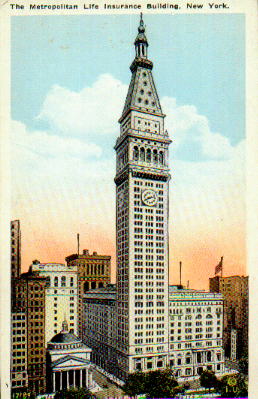
January: The Metropolitan Life Insurance Company Tower is the world’s tallest skyscraper at 700 feet, and would retain that title for...three years. The opening is celebrated lavishly at the Hotel Astor.

February: The cook known publicly as ‘Typhoid Mary’ is released from her three-year quarantine. Mary Mallon had agreed to give up work as a cook after extensive education on hygiene. (By 1915, she would be taken in to quarantine again and remain there until her death.)


Tuesday, March 6, 2012

Dear Diary: I had so many nice things to say...


March 8, 1918

Going up in the lift at Holborn the other day I stood next to a boy of fourteen or so, whose head only was visible among the crowd. I noticed that it was an extremely interesting, sensitive, clever, observant head; rather sharp, but independent looking. One couldn’t tell from his cap whether he was well off or not. I came to the conclusion that he was the son of an officer with whom he stood. When we got to the street I looked at once at his legs. His trousers had holes in them. From that one could judge what a wretched affair his life will be.

-- Virginia Woolf, from A Moment’s Liberty: the Shorter Diary, abridged and edited by Anne Olivier Bell

Tuesday, February 21, 2012

Hobble Skirts, Muckrakers, and Bohemians: The Progressive Era

Mary Robert Rinehart’s novel, When a Man Marries, was written in 1910, in the middle of what came to be known as the ‘Progressive Era’ in the United States. Beginning in the 1890s--the ‘Gay Nineties’--and ending roughly with the start of World War I, the Progressive Era marked a time of social and political change.

A new vocabulary characterized this era. Americans would speak about a "public interest" that was opposed by "special interests." They would also speak about "efficiency" and "expertise" in government and “morality” in foreign affairs. For the first time, Americans spoke of "social workers," "muckrakers," "trustbusters," "feminists," "social scientists," and "conservation." ~ Digital History -- Progressivism

Monday, February 20, 2012

Meet Vintage Reader Contributor Audra

I'm a 30-something married lesbian with a thing for literary fiction and historical novels. I love interesting heroines, gorgeous prose, place as character, and the occasional werewolf. Like my favorite people in the world, 'bookworm' could be my middle name, and I never travel without something to read. (Which is why I so love my e-reader!) I'm an Air Force brat currently living in Boston, and I work full time at a job that, alas, doesn't pay me to read all day. I loved Little Women and Caddie Woodlawn as a kid, Wuthering Heights and Rebecca when a teen, and Persuasion and Out of Africa as an adult, and I reread all of those books every few years. (Of course, that doesn't stop me from adding to the list: my GoodReads favorites shelf numbers at 65, and that's me restraining myself!)